THE KIDS CIRCLE
The numbers
Kids in difficult family situations face many challenges. I have personally experienced these challenges and I was curious how wide spread this is. To study this, I used data collected by the Child and Adolescent Health Measurement Initiative to look at 4 outcomes:
1) How does family structure affect how well children flourish?
2) How does family structure affect how kids' attendance at school?
3) How does family structure affect kids mental health?
4) How does family structure affect kids participation in extracurricular activities?
Below I share my findings in these areas.
The goal of studying this data and publishing it on this site is to inform others that they are not alone and how this can affect them. Based on my my study results, I have developed a companion app to this website that will help coach you and motivate you through these difficult times. I have worked with researchers familiar with Cognitive Behavioral Therapy to help keep you motivated and stay on track with your goals
You can access my app here.
The effect of family on how well kids flourish
The data shows that children from two-parent households, whether currently married or not, are more likely to meet all three criteria for flourishing, with 63.0% of children from currently married households meeting all three criteria. However, children from other family types, including single-parent households, grandparent households, and other family types, also have a significant percentage of children meeting all three criteria for flourishing, ranging from 42.3% to 57.7%.
It's important to note that the data does not provide information on the specific factors that contribute to flourishing or lack thereof, and that there may be other factors beyond family structure that can impact children's well-being. Nonetheless, the data suggests that children from a variety of family types can experience positive well-being and flourish, and that family structure is just one of many factors that can impact a child's well-being.


The effect of family on mental health
This data provides information on the mental, emotional, developmental, and behavioral outcomes of children based on their family structure. The data shows the percentage of children who have 1 or more reported MEDB (mental, emotional, developmental, or behavioral) problems or qualify on the CSHCN (Children with Special Health Care Needs) Screener emotional, behavioral, or developmental criteria, versus those who do not have these problems.
The data reveals that children from other family types, such as those from single-parent households, grandparent households, or other family types, are more likely to have reported MEDB problems or qualify on the CSHCN Screener criteria. For example, 26.3% of children from single-parent households have reported MEDB problems or qualify on the CSHCN Screener criteria, compared to 21.2% of children from currently married households.
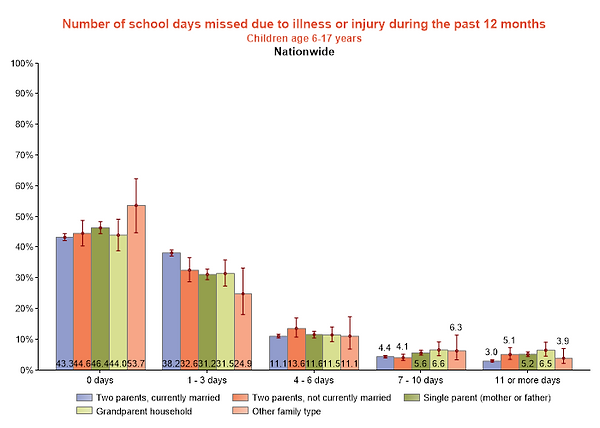
The effect of family on school attendance
This data shows how many days a child has missed school due to illness or injury, broken down by family structure. The percentages show the proportion of children who missed 0 days, 1-3 days, 4-6 days, 7-10 days, or 11 or more days of school due to illness or injury.
The data indicates that children from all family types have missed some days of school due to illness or injury, but the percentages differ across family structures. Children from other family types, such as those from single-parent households or other family types, are more likely to miss school due to illness or injury, with 53.7% of children from other family types missing 0 days of school compared to 43.3% of children from currently married households.
It's important to note that the data does not provide information on the specific factors that contribute to illness or injury, and that there may be other factors beyond family structure that can impact children's attendance at school. Nonetheless, the data suggests that children from certain family types may be more likely to miss school due to illness or injury, and that addressing the health and well-being of children in these families is important for promoting their attendance and success in school.
The effect of family on extracurricular activities
This data shows the percentage of children who participated in one or more extracurricular activities, broken down by family type. Extracurricular activities can include things like sports teams, music lessons, clubs, or other organized activities outside of regular school hours.
The data suggests that children from two-parent households who are currently married are more likely to participate in extracurricular activities, with 78.9% of children participating, compared to 61.5% of children from single-parent households and 55.6% of children from grandparent households. Children from two-parent households who are not currently married are the least likely to participate in extracurricular activities, with only 58.0% participating.
It's important to note that while the data shows differences in participation rates across family types, it does not provide information on the reasons for these differences. Other factors such as income, location, or school resources may also impact participation in extracurricular activities. Nonetheless, the data suggests that children from certain family types may face additional barriers to participating in these types of activities, and that efforts to promote participation and access to extracurricular activities for all children may be important for promoting their overall well-being and success.
